Blog
Engine Oil vs. Gear Oil: Understanding the Key Differences

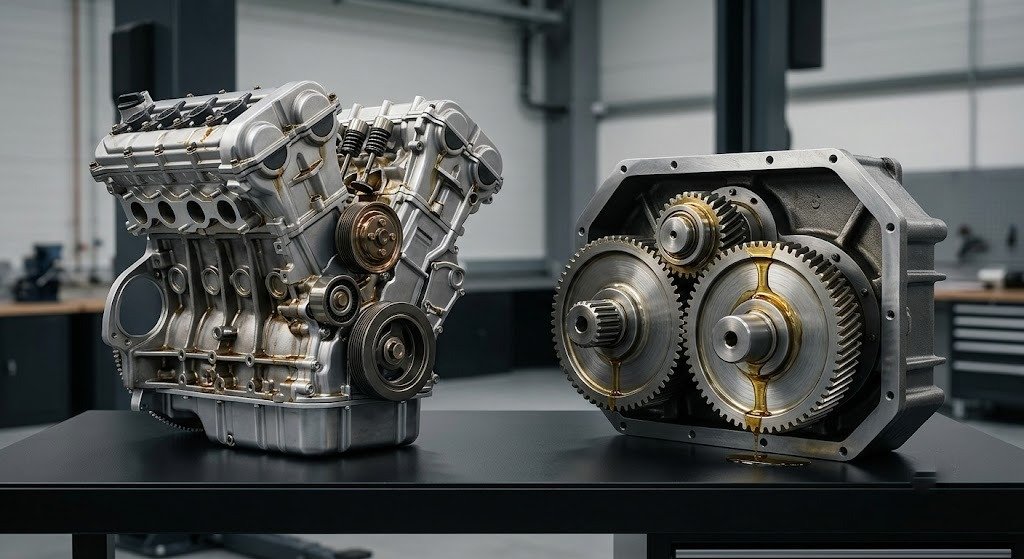
Lubricants play a critical role in ensuring the smooth operation and long life of automotive and industrial machinery. Among the most commonly used lubricants are engine oil and gear oil. Although both are designed to reduce friction and protect metal components, they are formulated for completely different applications and operating conditions.
Many people assume that engine oil and gear oil can be used interchangeably because both provide lubrication. However, each lubricant contains a unique blend of base oils and additives specifically engineered for the environment in which it operates. Using the wrong lubricant can reduce efficiency, increase wear, and even cause severe mechanical damage.
This guide explains the major differences between engine oil and gear oil, their functions, applications, benefits, and why choosing the correct lubricant is essential for reliable equipment performance.
What is Engine Oil?
Engine oil is a lubricant specifically designed for internal combustion engines. It circulates throughout the engine to reduce friction, cool moving parts, clean contaminants, and protect components from corrosion and wear.
Modern engine oils are formulated using high-quality base oils and advanced additives that improve fuel efficiency, oxidation resistance, and engine cleanliness.
Main Functions of Engine Oil
- Lubricates engine components
- Reduces friction and wear
- Controls engine temperature
- Prevents sludge formation
- Protects against rust and corrosion
- Improves fuel efficiency
- Cleans engine deposits
- Extends engine life
What is Gear Oil?
Gear oil is a heavy-duty lubricant designed for gearboxes, manual transmissions, differentials, and industrial gear systems. Unlike engine oil, gear oil must withstand extremely high pressure between meshing gears.
Gear oils contain Extreme Pressure (EP) additives that create a protective film, preventing wear even under heavy loads and shock conditions.
Main Functions of Gear Oil
- Lubricates gears and bearings
- Protects against heavy-load wear
- Reduces gear noise
- Prevents pitting and scoring
- Dissipates heat
- Protects against corrosion
- Ensures smooth gear operation
Key Differences Between Engine Oil and Gear Oil
1. Purpose
Engine Oil
Designed for internal combustion engines where it lubricates pistons, crankshafts, valves, and camshafts.
Gear Oil
Designed for transmissions, differentials, and gearboxes operating under heavy loads.
2. Viscosity
Engine oils generally have lower viscosity grades such as:
- 5W-30
- 10W-40
- 15W-40
Gear oils use different viscosity classifications such as:
- 75W-90
- 80W-90
- 85W-140
Although gear oil numbers appear higher, the SAE grading system for gear oils differs from engine oils.
3. Additive Technology
Engine oil contains additives such as:
- Detergents
- Dispersants
- Anti-oxidants
- Anti-wear additives
- Corrosion inhibitors
Gear oil contains:
- Extreme Pressure (EP) additives
- Anti-foam agents
- Rust inhibitors
- Oxidation stabilizers
- Heavy-load protection additives
These additive packages are designed for completely different operating conditions.
4. Operating Conditions
Engine oil operates under:
- High temperatures
- Continuous combustion
- Fuel contamination
- Carbon deposits
Gear oil operates under:
- Heavy mechanical loads
- High gear pressure
- Shock loading
- Slow rotational speeds
Benefits of Engine Oil
Using premium engine oil offers several advantages:
Superior Wear Protection
Protects engine components from metal-to-metal contact.
Cleaner Engine
Prevents sludge and varnish buildup.
Better Fuel Economy
Reduces friction and improves engine efficiency.
Excellent Thermal Stability
Maintains lubrication under high operating temperatures.
Longer Engine Life
Reduces wear and extends service intervals.
Benefits of Gear Oil
Premium gear oils provide:
High Load Carrying Capacity
Protects gears under extreme pressure.
Smooth Gear Shifting
Ensures reliable transmission performance.
Reduced Wear
Prevents pitting, scoring, and surface damage.
Improved Efficiency
Minimizes friction losses within the gearbox.
Longer Gearbox Life
Extends the service life of gears and bearings.
Applications
Engine Oil Applications
- Passenger Cars
- SUVs
- Diesel Engines
- Petrol Engines
- Commercial Vehicles
- Trucks
- Construction Equipment
- Agricultural Machinery
Gear Oil Applications
- Manual Transmissions
- Industrial Gearboxes
- Differential Systems
- Mining Equipment
- Marine Gearboxes
- Heavy-Duty Machinery
- Construction Equipment
Common Mistakes to Avoid
Many equipment failures occur because of incorrect lubricant selection.
Avoid these common mistakes:
- Using engine oil inside a gearbox
- Using gear oil inside an engine
- Mixing different lubricant grades
- Ignoring manufacturer recommendations
- Delaying oil replacement
- Purchasing low-quality lubricants
Using the correct lubricant protects equipment and reduces maintenance costs.
Maintenance Tips
To maximize equipment performance:
- Follow the manufacturer’s recommended oil specifications.
- Replace lubricants at scheduled service intervals.
- Inspect oil levels regularly.
- Replace filters whenever required.
- Monitor for contamination and leaks.
- Store lubricants in clean, dry conditions.
Routine maintenance significantly improves equipment reliability and lifespan.
Frequently Asked Questions
Can engine oil replace gear oil?
No. Engine oil and gear oil are formulated for completely different applications and should never be used interchangeably unless specifically recommended by the equipment manufacturer.
Why is gear oil thicker than engine oil?
Gear oil is designed to withstand extreme pressure between gears, requiring a thicker protective film and specialized EP additives.
How often should gear oil be replaced?
Replacement intervals depend on the vehicle or equipment manufacturer, operating conditions, and lubricant type.
Does premium lubricant improve equipment life?
Yes. High-quality lubricants provide better wear protection, improved thermal stability, cleaner operation, and longer service intervals.